Chasing Ghost Tracks: Inside the Underground World of Obsessive Music Archivists Who Won't Let a Song Stay Lost
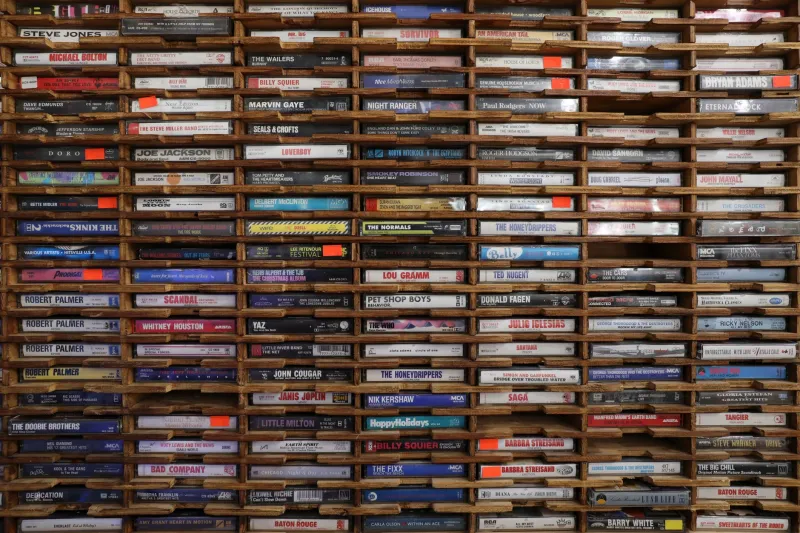
There's a Discord server — you won't find it by Googling — where about two hundred people argue, with genuine intensity, about whether a particular cassette recording from a 1993 Chicago basement session counts as an "official" demo or just a rehearsal tape someone's cousin digitized wrong. The debate has been going on for three years. Nobody is getting paid. The artist in question hasn't released anything since 2001 and almost certainly has no idea the server exists.
This is the world of the obsessive music archivist, and it's stranger and more devoted than most people realize.
The Puzzle That Never Closes
For these collectors, a discography is never finished — it's just currently incomplete. Every artist, no matter how obscure, leaves behind a trail of unreleased material: studio outtakes, live recordings from venues that no longer exist, four-track demos handed to A&R reps who lost them in a desk drawer, B-sides pressed in quantities of five hundred for a regional market and never reissued. The archivist's job — self-appointed, unpaid, consuming — is to find all of it.
"Most people think a discography is just the albums," says Marcus, a 41-year-old IT consultant in Portland who asked that his last name not be used. He's spent roughly fifteen years cataloging the complete recorded output of a post-punk band that released two albums on a small Minneapolis label in the late '80s before dissolving. "But the real discography includes everything that touched a recording medium. Soundboard tapes. Radio sessions. The stuff that got pressed in Japan with different artwork. That's where it gets interesting."
Marcus currently has a spreadsheet with over 340 entries for a band most people have never heard of. He estimates he's missing maybe thirty items he knows exist — and an unknown number he hasn't identified yet.
Why These Songs, Why Now
It's worth asking what drives someone to spend years hunting a three-minute demo that played once at a show in Akron in 1987. The answer, when you dig into it, isn't really about the music itself — or not only about that.
There's something about incompleteness that functions like a splinter. Once you know a recording exists and you don't have it, it bothers you. It represents a gap in a story that should be whole. These archivists aren't just collectors in the traditional sense — they're narrative completionists. The discography is a kind of biography told in audio, and a missing track is a missing chapter.
There's also a preservation instinct that feels genuinely urgent. Physical media degrades. Cassettes warp. Hard drives fail. The person who recorded a band's soundboard in 1991 is now in their sixties, and when they're gone, that tape might go with them. Archivists talk about this with a quiet anxiety — a race against entropy they know they're probably losing in aggregate, even when they win individual battles.
"I got a message from a guy in Wisconsin who had a DAT tape of a show from 1994," says Renata, a 36-year-old librarian in Philadelphia who archives recordings from the early '90s lo-fi scene. "He'd been holding onto it for thirty years and didn't know what to do with it. His player had broken. We got him a working deck, he digitized it, and now that show exists in the world instead of dying in a box. That's the whole thing, right there."
The Database as Sacred Object
The infrastructure these communities build around their obsessions is genuinely impressive. Beyond spreadsheets, there are custom-built databases, wiki pages with citation standards that would satisfy an academic journal, and elaborate tagging systems that distinguish between, say, a "rough mix" and an "alternate vocal take" and a "work tape" — distinctions that matter intensely to the people involved.
Some of the most detailed archives exist on platforms most people have never visited: niche forum threads that have been running since 2004, static HTML pages maintained by people who learned basic web coding specifically to host their catalogs, private tracker communities where upload ratios are tracked with the seriousness of a credit score.
The standards are strict. Provenance matters enormously — where did the recording come from, who transferred it, what equipment was used, how many generations removed from the original is this copy? A recording labeled without that information is treated with suspicion. In some communities, posting an unverified file without documentation is the kind of infraction that gets you quietly frozen out.
"It's basically peer review," Marcus says, not entirely joking.
The Artists Who Don't Know
One of the stranger aspects of all this is how often the subjects of these archives are completely unaware they exist. Artists who put out a couple of records decades ago, moved on with their lives, and assumed their back catalog was just gone — they sometimes stumble across a wiki that catalogs their complete output with more rigor than they applied to creating it.
Reactions vary. Some are genuinely moved. Others find it unsettling in a way that's hard to articulate — like discovering someone has been keeping detailed notes on your childhood. A few have reached out to archivists with corrections, or to share materials they'd assumed nobody wanted. Those moments are treated in the community like minor religious events.
Renata once got an email from a musician whose work she'd been cataloging for years. He had a box of tapes in his garage he'd never thought to digitize. "He said, 'I figured nobody cared.' I had to explain to him that like forty people care, intensely, and have for a decade."
Static and Signal
What makes this subculture resonate — beyond the obvious romance of preservation — is the way it treats fragments as complete things. A three-minute demo isn't a failed song. It's a document. It captures a moment in a creative process that would otherwise be invisible: the version of the song before the producer got to it, before the label asked for a more commercial chorus, before the band decided to go in a different direction entirely.
In that sense, the lost recording is often more honest than the finished one. It's the signal before anyone cleaned it up.
That's what these archivists are chasing, ultimately. Not just completeness for its own sake, but access to something unmediated — music that wasn't meant to be heard by anyone, preserved now precisely because someone cared enough to make sure it wasn't lost to static.
The spreadsheet in Ohio keeps growing. The Discord server keeps arguing. Somewhere, a cassette tape is sitting in a box in a garage, and someone is going to find it.