Breaking on Purpose: How Artists Turned the Digital Error Into a Language
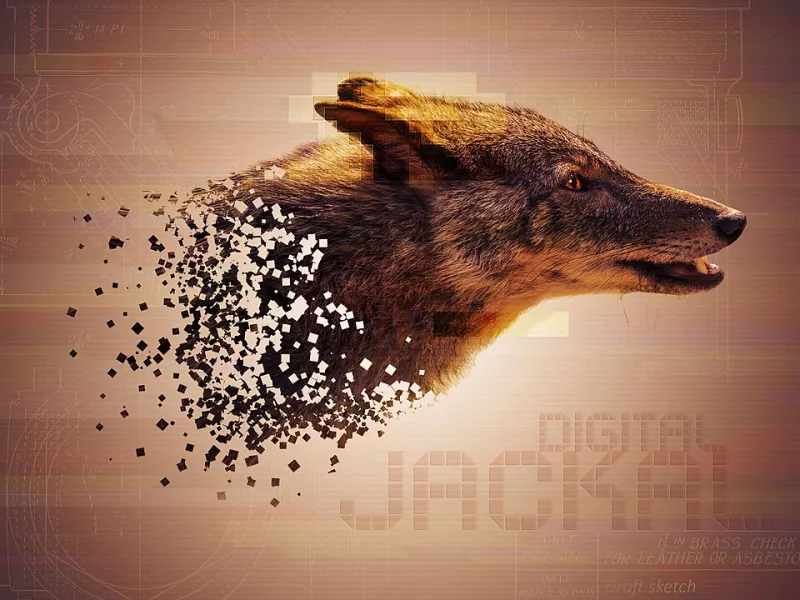
Photo: Arielinson, CC BY-SA 4.0, via Wikimedia Commons
There's a specific sound a CD makes when it's about to give up. Not the clean skip of a scratch, but something deeper — a stuttering collapse, a loop that wasn't supposed to loop, the audio equivalent of a sentence that forgets how to end. For most of the population, that sound is a minor annoyance. For a growing cluster of experimental artists, it's a compositional tool.
We've been here before, sort of. Glitch art had its cultural moment — somewhere around the early 2010s, the aesthetic of corrupted video and pixelated distortion became so thoroughly absorbed by mainstream design that it started appearing in movie trailers, energy drink ads, and the visual branding of tech companies that wanted to seem edgy without actually breaking anything. The moment a style gets used to sell protein powder, you know the avant-garde has left the building.
But something interesting happened after the glitch aesthetic got swallowed by commercial culture. The artists who had been working with technical failure as a genuine medium — not as a look, but as a process — kept going. And what they're doing now is considerably weirder and more interesting than the stuff that made it onto the mood boards.
The Difference Between Style and Substance
The distinction that matters here isn't aesthetic — it's intentional. Glitch art as it was commercially adopted was primarily about appearance: make something look broken to convey a mood. The artists working in what some are calling "error media" or "failure poetics" are doing something structurally different. They're using the actual mechanics of technical failure — compression artifacts, codec breakdowns, software crashes, buffer overflows — as generative processes that produce outcomes the artist can shape but not fully control.
The distinction sounds academic but it produces very different work. When you're genuinely working with a broken or misbehaving system rather than simulating brokenness, you're in a collaborative relationship with something that has its own logic. The errors aren't decorative. They're load-bearing.
Soundwise, this has produced some of the more genuinely disorienting music being made right now. Artists working in what loosely gets called "circuit bent" or "error music" territory — though both terms feel increasingly inadequate — are building compositions around the specific failure modes of particular hardware and software. The sounds aren't samples of errors. They're the errors themselves, structured into something that functions as music without fully surrendering to it.
Compression as Expression
Video compression is one of the more fertile territories here, and it's worth understanding why. When a video codec compresses footage, it doesn't store every pixel of every frame — that would require enormous file sizes. Instead, it stores key frames and then records the differences between frames, using mathematical predictions to reconstruct motion. When those predictions go wrong — when the codec encounters something it wasn't designed to handle — you get artifacts: blocky distortions, color bleeds, phantom motion that smears across the frame.
For a certain type of artist, those artifacts are incredibly expressive. They reveal the assumptions baked into the algorithm — what kinds of motion it expected, what kinds of color relationships it was built to recognize. A codec failing on a particular image tells you something about the image and something about the codec simultaneously.
Artists like Sabato Visconti, who has been working in this space for over a decade, have articulated this as a kind of truth-telling. The glitch doesn't lie. It shows you the structure beneath the surface — the decisions and limitations that are normally invisible inside a smoothly functioning system. Making those visible isn't just aesthetically interesting; it's philosophically pointed.
When the Bug Is the Feature
Software bugs occupy a particularly interesting position in this conversation. A bug is, by definition, unintended behavior — something the programmer didn't design and probably didn't want. But unintended behavior is still behavior, and it follows its own internal logic. Learning to read that logic, and then deliberately triggering specific bugs to produce specific outcomes, is one of the more technically demanding forms of artistic practice currently happening online.
There are communities — small, insular, deeply online — dedicated to cataloging the failure modes of specific software versions. Not to fix them. To use them. A bug in a particular version of video editing software that produces a specific kind of frame duplication. A quirk in an audio plugin that generates unexpected harmonic content under certain conditions. These are treated less like problems and more like instruments with unusual tuning.
The community overlap with the kind of internet culture that treats system errors as meaningful text is probably not coincidental. There's a shared sensibility: the idea that the gaps and failures in designed systems reveal something true that the functioning surface conceals.
The Philosophical Weight of Imperfection
What makes the current moment interesting — different from the glitch aesthetic peak — is that the conversation around this work has gotten more explicitly philosophical. Artists working in error media are increasingly articulate about what they think failure means, and why it matters that they're working with it rather than around it.
Part of this is a response to the broader cultural obsession with seamlessness. The dominant aesthetic of consumer technology for the past decade has been the elimination of friction — interfaces that anticipate your needs, content that loads instantly, surfaces with no visible seams. That's a particular vision of what good technology looks like, and it carries ideological freight. Seamlessness implies that the system is working as intended, that the design choices embedded in it are natural and inevitable rather than chosen.
Deliberate failure, from this angle, is a form of refusal. It insists on making the machinery visible. It refuses the premise that smooth functioning is the same thing as correctness.
That's a lot of weight to put on a compression artifact. But the artists doing this work are clearly carrying it intentionally.
Where It's Going
The honest answer is that nobody's quite sure. The communities producing this work are small and scattered — across Bandcamp, Vimeo, itch.io, and a handful of more obscure platforms that feel increasingly like deliberate choices rather than defaults. The work doesn't travel well through the channels that mainstream cultural attention flows through, partly because it often doesn't compress cleanly — which is either a problem or a feature, depending on how you look at it.
What seems clear is that the artists who moved past glitch-as-aesthetic into something more rigorous aren't going back. They've found a set of tools and a set of questions that feel genuinely productive, and the fact that the tools are technically broken is kind of the whole point.
The signal was always in the static. Some people just figured out how to tune into it.