Tuning Into Nothing: The Artists Who Make Music From Frequencies You Were Never Meant to Hear
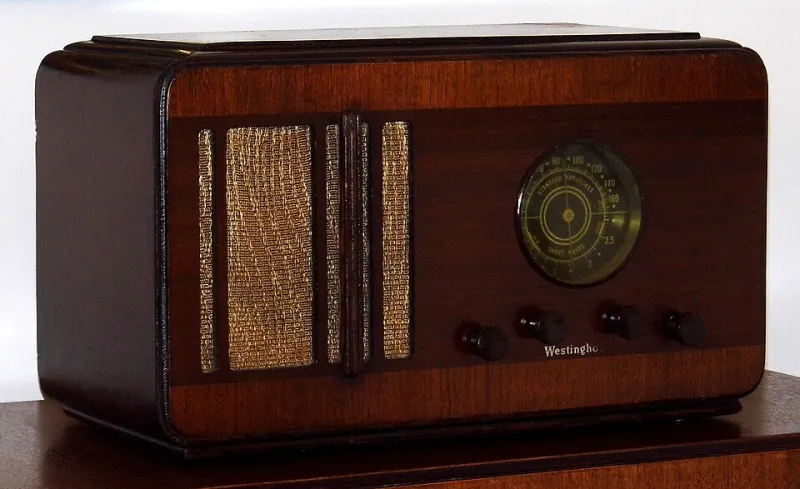
Photo: Joe Haupt from USA, CC BY-SA 2.0, via Wikimedia Commons
Crank a shortwave radio past its last recognizable station and keep going. Past the dead air, past the burst of static, past the faint ghost of a signal that might be a numbers station or might just be atmospheric interference — you'll hit a frequency that sounds, to most people, like absolutely nothing worth listening to.
To a growing community of experimental musicians and sound artists scattered across the US and beyond, that's exactly where the interesting stuff lives.
What Is Signal-Based Music, Actually?
Let's get the obvious question out of the way: yes, this is a real thing, and no, it's not just pressing record on a broken radio and calling it art (though some of it is, and some of that is great).
Signal-based music — which sits at the intersection of noise music, field recording, and experimental electronics — uses electromagnetic interference, shortwave radio broadcasts, radio frequency (RF) noise, and related phenomena as raw sonic material. Artists in this space might sample an actual shortwave numbers station, record the electromagnetic field of a dying CRT television, or build custom antennas designed to pick up specific interference patterns from power lines or cell towers.
The genre has deep roots. John Cage was messing with radio as a musical instrument back in the 1950s. Alvin Lucier's "I Am Sitting in a Room" (1969) used the resonant frequencies of physical space as a compositional tool. But what's happening now feels different — more urgent, more networked, more explicitly engaged with the specific texture of contemporary technological life.
The Artists Finding Beauty in the Interference
The Shortwave Hunters
For artists like Brooklyn-based sound designer Mara Kellis (who performs under the name Deadband), the appeal of shortwave radio is partly historical and partly sonic. "There's this whole layer of communication infrastructure that's technically still active but functionally abandoned," she explains. "Numbers stations, military time signals, old beacon frequencies. Nobody's really listening. And the signals themselves are gorgeous — they've got this physical quality from traveling through the ionosphere. They bounce off the atmosphere. They degrade in really specific ways."
Kellis's live sets involve a modified shortwave receiver, a laptop running custom Max/MSP patches, and a rotating cast of found frequencies. The results sit somewhere between ambient music and horror film sound design — recognizable enough to feel like communication, degraded enough to feel like something being lost.
The EMF Prospectors
Electromagnetic field (EMF) recording is its own subgenre, and it's exactly what it sounds like. Artists use modified coil pickups — essentially the same technology as a guitar pickup, repurposed to detect ambient electromagnetic fields — to record the sounds emitted by everyday objects: power transformers, laptop fans, fluorescent lights, Wi-Fi routers.
Los Angeles-based artist Deon Park, who releases music under the handle "Ferrite Core," has built a catalog out of these recordings. His 2022 tape release "Infrastructure" consisted entirely of EMF recordings made in different neighborhoods of LA — the specific electromagnetic signature of Koreatown versus Silver Lake versus the industrial corridor near the port.
"Every space has its own electromagnetic fingerprint," Park says. "The mix of devices, the age of the wiring, the density of wireless signals. I'm basically making field recordings, but of a layer of the environment that most people never consciously perceive."
The Glitch Composers
Then there are artists who work with interference as a compositional tool rather than a recording medium — people who deliberately introduce signal degradation, feedback loops, and transmission errors into their process.
Massachusetts-based composer Rin Castellano works with a setup that includes a shortwave transmitter, a receiver, and a series of analog effects units. She transmits audio, intercepts it with the receiver, processes the interference-degraded signal, and transmits it again — creating feedback loops where the degradation itself becomes a compositional element.
"The interference isn't something I'm fighting," she explains. "It's a collaborator. I set up the conditions and then I respond to what happens. The system has its own logic."
Why This Genre Is Having a Moment Right Now
Noise music and experimental electronics have existed for decades, but signal-based work feels particularly resonant right now, and it's not hard to understand why.
We live inside an electromagnetic environment of extraordinary density and complexity. The air around you right now is thick with Wi-Fi signals, LTE broadcasts, Bluetooth handshakes, GPS signals, and the passive electromagnetic emissions of dozens of devices. That environment is invisible and mostly inaudible, but it's not neutral — it shapes behavior, it structures attention, it carries the infrastructure of basically all contemporary communication.
Making art from that environment is, at minimum, a form of attention. It's saying: this is real, this has texture, this is worth listening to.
There's also something going on with the aesthetics of obsolescence. Shortwave radio, numbers stations, analog interference — these are technologies and phenomena associated with a specific mid-20th-century communication infrastructure that's either defunct or rapidly becoming so. Sampling them feels like archaeology. It feels like pulling signals from a layer of history that's still technically broadcasting but that almost nobody is tuned into.
The Gear and the Community
One of the interesting things about this scene is how low the barrier to entry actually is. A basic shortwave receiver costs $30-50 on Amazon. EMF pickup coils can be built for under $20 with parts from any electronics supplier. The software tools — Pure Data, Max/MSP, Audacity for basic editing — range from free to relatively affordable.
This has made the community notably decentralized and DIY. Much of the output circulates on Bandcamp, on small cassette labels, in Discord servers devoted to specific equipment or techniques. There are YouTube channels dedicated to shortwave listening that have developed followings among sound artists. There are Reddit communities where people post recordings of unusual interference and ask for help identifying the source.
It's a scene that feels, in some ways, genuinely native to the internet — distributed, collaborative, built around niche knowledge and shared enthusiasm rather than institutional support or commercial infrastructure.
What the Static Is Actually Saying
Here's a question worth sitting with: why does noise sound like something to us? Why does a degraded shortwave signal, or the electromagnetic hum of a transformer, or the interference pattern from a dying piece of hardware carry emotional weight?
Part of the answer is probably cognitive — human brains are pattern-recognition machines, and we'll find music in almost anything if the conditions are right. But part of it might be something stranger. We built these systems. We filled the electromagnetic spectrum with our communications, our infrastructure, our signals. The noise that leaks from those systems is, in a real sense, a byproduct of human activity — the acoustic shadow of civilization.
Listening to it carefully, the artists in this scene suggest, might tell us something about where we are and what we've built. Not a message, exactly. More like a texture. A frequency. A signal in the static, if you know how to tune in.