Ghosts in the Feed: The Digital Archaeologists Preserving Social Media's Lost Worlds
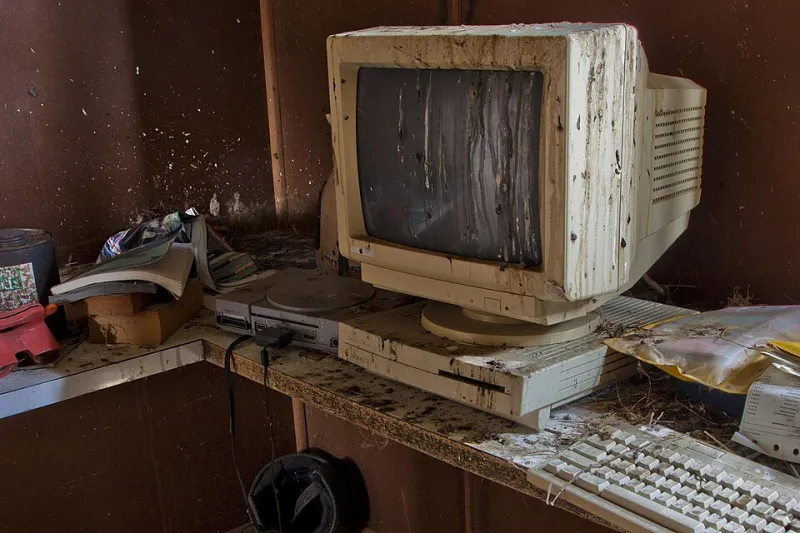
Photo: Steve Parker, CC BY 3.0, via Wikimedia Commons
Somewhere on a hard drive in Ohio, there's a folder containing over 40,000 screenshots from a Friendster profile that no longer exists. The account belonged to a 19-year-old from Phoenix who posted about ska bands and Warcraft guilds and a crush who never texted back. The person who saved all of it never met her. They just didn't want her corner of the internet to disappear without a trace.
This is what digital archaeology actually looks like — not glamorous, not particularly lucrative, and kind of impossible to explain at a dinner party. But for a growing community of internet historians, archivists, and what you might loosely call platform mourners, preserving the wreckage of dead social networks has become something close to a calling.
The Platforms We Buried
The graveyard is fuller than most people realize. Friendster, launched in 2002 and effectively dead by 2011. MySpace's golden era, before it pivoted to a music platform nobody asked for. Vine, which Twitter killed in 2016 despite — or maybe because of — the fact that it had genuinely changed how comedy worked online. Google+, which tried to be everything and ended up being nothing. And Tumblr, which didn't technically die but suffered what archivists call a "collapse event" in December 2018 when its adult content ban triggered a mass exodus that permanently altered the platform's character.
Each of these platforms wasn't just a website. They were ecosystems — specific combinations of features, community norms, and ambient culture that produced content and connections that couldn't be replicated anywhere else. When they went offline or transformed beyond recognition, they took all of that with them.
The Internet Archive's Wayback Machine catches some of it. But not all of it — not the videos, not the interactive elements, not the feeling of what it was like to be logged in at 2 a.m. scrolling through a feed that no longer exists.
The People Doing the Work
The archivists operating in this space are a genuinely eclectic group. Some are academic researchers studying digital culture at universities. Some are journalists who covered the early social web and feel a professional obligation to the historical record. And some are just people who loved a platform deeply and couldn't accept that it was gone.
Communities dedicated to this work have popped up across Reddit, Discord, and a handful of forums that themselves feel like artifacts of a different internet era. They trade screenshots, share cached pages, and reconstruct timelines of platform features that have since been deprecated or deleted. There's a particular obsession with interface archaeology — tracking how a platform's design evolved over time, which buttons moved where, which features appeared and disappeared.
One archivist who goes by the handle "Cascadefile" online has spent the better part of three years building what they describe as a "functional memory map" of Vine. Not just the videos — those are relatively well-preserved on YouTube compilations — but the social architecture. Who followed whom. Which accounts were the hubs of specific subcultures. How jokes traveled through the network. "The content is the easy part," they wrote in a post that circulated through several preservation communities last year. "What's hard to save is the topology. The way it all connected."
Why It Matters (and Why People Argue About That)
Not everyone agrees that this work is worth doing, or that framing it as preservation is even accurate. Critics — and there are some — point out that a lot of what's being saved is ephemeral content that was never meant to last. Status updates about what someone ate for lunch. Reaction GIFs. Inside jokes that required being online in a specific week of a specific year to understand.
But that argument tends to miss the point in an interesting way. Ephemeral content is exactly what historians have always struggled to capture. We know a lot about what powerful people wrote in letters and published in books. We know comparatively little about what ordinary people said to each other on an average Tuesday. Social media, for all its toxicity and noise, created an unprecedented record of everyday life — and most of that record is quietly disappearing.
There's also a cultural specificity argument. Vine's six-second format produced a comedic sensibility that genuinely influenced how a generation of Americans communicate. The specific humor of mid-2010s Tumblr — ironic, self-aware, deeply weird — shaped writers, artists, and cultural critics who are now working in mainstream media. Losing the source material makes it harder to understand where those sensibilities came from.
The Museum Nobody Asked For
Some preservation efforts have moved beyond personal hard drives and Discord servers into something more publicly accessible. The "Lost Networks" project, maintained by a rotating collective of volunteers, hosts a searchable database of documented platform features, community histories, and oral testimonies from early users of defunct social sites. It's not polished. The UI looks like something built in 2009, which is either accidental or a very deliberate aesthetic choice. But it's one of the more comprehensive resources for anyone trying to understand what the social web looked like before the current platform oligarchy locked everything down.
There are also more informal archives — YouTube channels dedicated to "internet history" content that walk viewers through the rise and fall of specific platforms, often with a mixture of nostalgia and genuine critical analysis. These channels pull surprisingly significant audiences, which suggests that the appetite for this kind of retrospective content is bigger than the mainstream internet tends to acknowledge.
Signal Persistence
What's striking about all of this, if you spend any time in these communities, is how little it resembles simple nostalgia. The people doing this work aren't just sad that their favorite app is gone. They're trying to articulate something about how the internet creates and destroys culture — and how the speed of that cycle means we're constantly losing things before we've had a chance to understand what they were.
Every platform that dies takes a particular kind of social possibility with it. The specific constraints of a format — Vine's six seconds, Friendster's testimonials, early Tumblr's reblog chains — generate specific kinds of creativity and connection. When those constraints disappear, so do the communities and art forms that grew up inside them.
The archivists know they're fighting a losing battle in some fundamental sense. They can't save everything. They can't even come close. But they're creating a record of what was possible — of the different ways people figured out how to be online together before the algorithm decided it knew better.
That feels worth preserving. Even the ska fan from Phoenix who never knew anyone was paying attention.