Concrete Ghosts: The Hypnotic World of Dead Mall Ambiance and Why Millions Can't Look Away
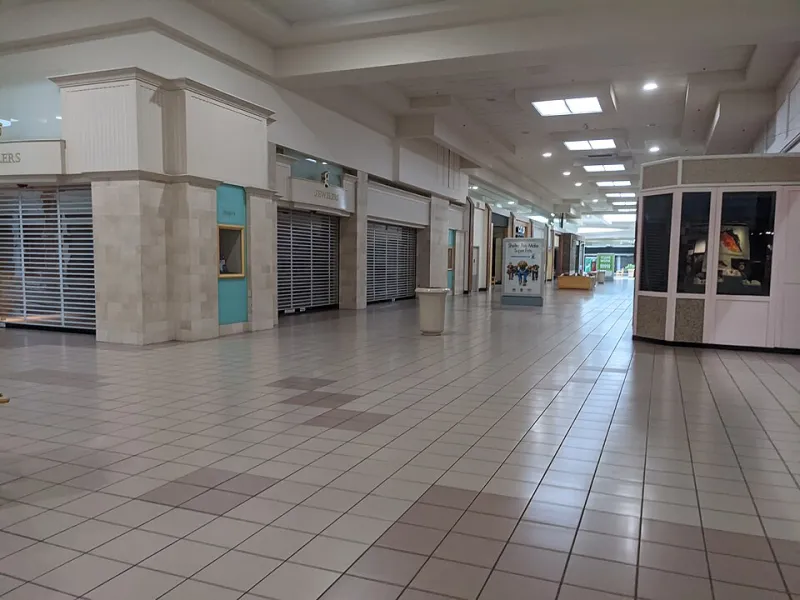
Photo: 3steph14, CC BY-SA 4.0, via Wikimedia Commons
There's a fluorescent light somewhere in a dead Ohio mall that has been flickering on YouTube for six hours. Nobody fixed it. Nobody's coming to fix it. And somehow, nearly 800,000 people have watched it do exactly that.
This is the dead mall ambiance movement — and if you haven't stumbled into it yet, the algorithm is probably already building a path toward your door.
The Mall as Ruin Porn You Actually Want to Live In
The term "ruin porn" gets thrown around a lot in conversations about urban decay photography, usually with a vague sense of guilt attached. Dead mall videos feel different, though. They're less voyeuristic and more... residential. Creators like Retail Archaeology, Seph Lawless, and a loose constellation of anonymous uploaders don't just document these spaces — they inhabit them on camera, walking slowly through food courts frozen in 2004, past shuttered Spencer's and hollowed-out Sears anchor stores, letting the hum of dying HVAC systems fill the audio track like a kind of secular hymn.
The videos run long. We're not talking ten minutes. The popular format is anywhere from two to eight hours of continuous footage, often with minimal editing, occasional lo-fi music layered underneath, and almost no narration. They look like screensavers for people who grew up eating Sbarro on Saturday afternoons.
And they are, genuinely, wildly popular. Several dead mall ambiance compilations have cleared the two-million-view mark. Comment sections read like group therapy sessions.
Nostalgia as a Frequency
Here's the thing that makes this niche so interesting from a cultural standpoint: it's not really about malls. Or rather, it's not only about malls.
For a significant chunk of American millennials and older Gen Z viewers, the suburban shopping mall was the defining third space of childhood. It was the place you went when you weren't at school and weren't at home. It had its own smell — a specific cocktail of Cinnabon, Bath & Body Works, and carpet that hadn't been replaced since the Clinton administration. It was loud and overstimulating and, in retrospect, kind of magical in the way only places you didn't fully understand as a kid can be.
Watching a dead mall video is, for many people, the closest thing to time travel they're going to get. Except the time machine only goes to a version of the past that's already decomposing.
Psychologists who study nostalgia — and yes, that's a real field — describe the emotion as fundamentally bittersweet. It's not pure happiness. It's happiness with a shadow underneath it. The dead mall video format seems almost purpose-built to sit in that exact emotional register. You're not watching something beautiful. You're watching something beautiful and dying. The combination is apparently irresistible.
The Creators Behind the Cameras
The people making these videos occupy a fascinating space somewhere between documentarian, urban explorer, and ambient musician. Several of the most-followed creators have talked publicly about approaching their work with genuine reverence — not mockery, not shock value, but something closer to archival grief.
One creator, who runs a channel dedicated exclusively to Midwest mall footage, described the work in a forum post as "trying to give these places a witness before they're gone." That framing resonates. A lot of these malls are scheduled for demolition or redevelopment. The video may be the last record that a particular food court or carousel or tile pattern ever existed.
There's also a craft element that doesn't get discussed enough. The best dead mall videos are carefully composed. Creators think about lighting (or the absence of it), about pacing, about which hallways to linger in and which to move through quickly. The audio mixing on the more polished uploads is genuinely impressive — field recordings layered with subtle reverb to make a half-empty Macy's feel like a cathedral.
The Attention Economy's Quiet Rebellion
Here's where it gets really interesting from a platform culture perspective: dead mall videos are almost aggressively anti-algorithmic in their DNA. They're long. They're slow. They have no hooks, no jump cuts, no calls to action. They are the exact opposite of what every YouTube optimization guide tells you to make.
And yet.
The engagement metrics on these videos are consistently strong. Watch time is high. Return viewers are common. Comment sections stay active for years after upload. Something about the format creates a kind of stickiness that faster, louder content doesn't.
Part of it is probably functional. A lot of viewers use these videos as background ambiance — something to put on while working, studying, or falling asleep. The dead mall becomes a kind of white noise machine that happens to also carry emotional weight. That's a genuinely unusual combination for online video content.
But part of it also feels like a small, quiet pushback against the relentless velocity of everything else online. In a media environment designed to keep you clicking, choosing to watch a flickering light in an empty mall for six hours is almost a radical act.
What We're Really Watching
The dead mall ambiance movement is, at its core, a community built around processing loss in a very specific American context. The loss of a particular kind of suburban childhood. The loss of physical third spaces. The loss of a version of consumer culture that, for all its vapidity, at least put people in the same building together on a Saturday.
The malls were never really the point. They were just the container. What people are watching when they queue up eight hours of empty corridors and broken escalators is something harder to name — a feeling that lives somewhere between memory and mourning, between comfort and grief.
The static, in this case, is the fluorescent hum. And millions of people are finding something like peace inside it.