Long Live the Dead Format: Why Some Digital Relics Refuse to Stay Buried
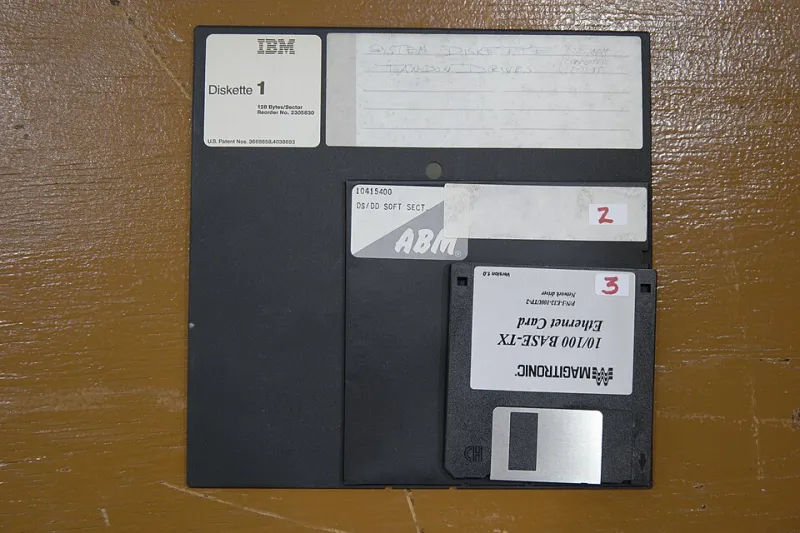
Photo: Kevin Savetz, CC BY 2.0, via Wikimedia Commons
Spotify serves you a song in a fraction of a second. The file format it uses to do that is optimized, compressed, and completely invisible. You'll never think about it. That's the point.
Somewhere else on the internet, someone is painstakingly converting a 1993 concert bootleg from SHN — a lossless audio format that peaked in popularity around 2001 and has been functionally obsolete for over a decade — into a carefully annotated archive entry, complete with lineage notes about which generation tape it came from and what equipment was used to transfer it.
These two realities coexist. And the gap between them says a lot about what we've decided to value in digital culture.
The Archaeology of the Playable
Let's establish what we're talking about, because "obsolete format" covers a lot of ground.
On the audio side, you've got SHN (Shorten), the format that the live music trading community — particularly Grateful Dead and Phish tapers — adopted in the late '90s as a way to share lossless bootlegs online before FLAC made it easier. SHN still has active communities maintaining archives of tens of thousands of shows. There's also the MOD file format, originating from the Amiga computer scene of the late '80s, which packages both the musical notes and the instrument samples into a single file. MOD and its variants (XM, IT, S3M) have a devoted following in the chiptune and demoscene communities that has never really wavered.
On the image side, you've got formats like PCX — a relic of early PC graphics that predates JPEG and still circulates in retro gaming communities — and the much-mourned FlashPix, which had a brief moment in the late '90s before being thoroughly abandoned.
And then there's RealAudio. The .ra and .ram files that defined streaming audio in the mid-to-late '90s, back when a 28.8k modem connection meant you were listening to something that sounded like a phone call from the bottom of a well. RealAudio is objectively worse than every audio format that followed it. It also has a small but passionate preservation community that argues its specific awfulness is historically irreplaceable.
Why Bother?
The preservation argument is the easy one: if nobody maintains the ability to play these formats, entire chunks of digital history become inaccessible. The Internet Archive does heroic work here, but the real day-to-day maintenance happens in smaller, specialized communities.
The Etree community — the network that built the infrastructure for lossless concert trading — is still active and still operates around SHN files alongside FLAC. Ask a longtime member why they haven't fully migrated and the answers vary, but one theme recurs: the format is part of the culture.
"SHN is what the community was built on," explained one Etree veteran who's been trading since the early 2000s. "Moving everything to FLAC made sense technically. But there's something about maintaining the SHN archives that feels like keeping the original record intact. It's not just the music. It's the whole ecosystem that produced it."
That's the deeper argument, and it's more interesting than pure preservation. These formats aren't just containers — they're cultural artifacts. The constraints of a format shape what gets made in it.
Constraint as Creative Force
This is where the MOD scene gets genuinely fascinating.
A MOD file has hard limits. The original format supported four channels. Early trackers — the software used to compose MOD music — had interfaces that looked like spreadsheets, with notes entered as data rather than drawn on a staff. Composing in MOD means working within those constraints, and a significant community of musicians still chooses to do exactly that.
The Modarchive hosts over 250,000 MOD-format files and has been running since 1996. New tracks are still being submitted. Not as novelty, not as irony — as genuine creative output from composers who find the format's limitations generative rather than restrictive.
"When you've got four channels and a fixed sample set, every decision matters," said one tracker musician who goes by Chromashift and has been composing in XM format since the early 2000s. "There's no hiding behind production. Either the composition works or it doesn't. That's clarifying."
This is the argument that shows up across multiple obsolete format communities: the constraint is the point. FLAC can represent any audio with perfect fidelity. MOD can't — and that inability forces a kind of discipline that open-ended tools don't.
It's not unlike the argument for shooting on film, or writing on a manual typewriter. The friction is the feature.
Authenticity and the Anti-Stream
There's also a political dimension here, even if most practitioners wouldn't use that word.
Streaming has homogenized the experience of music consumption in ways that are genuinely hard to overstate. Everything sounds the same because everything is delivered the same way, through the same apps, compressed to the same specs, surfaced by the same recommendation algorithms. Choosing a different format is a small act of refusal.
The audiophile community has made this argument for years around vinyl and high-resolution audio, but the obsolete-format communities are doing something slightly different. They're not chasing higher fidelity — SHN and MOD are not audiophile formats by any stretch. They're chasing specificity. The format as fingerprint. The format as proof that this particular thing came from this particular moment in digital time.
A RealAudio file of a 1997 webcast sounds bad in ways that are completely specific to 1997 webcasting. That badness is information. It tells you something about the bandwidth constraints of the era, the codec choices available, the compromises that had to be made. A modern re-encode at 320kbps would sound better and mean less.
The Ones That Got Away
Not every format finds its preservation community in time. Some just disappear.
FlashPix, the image format developed by Kodak and Microsoft in the mid-'90s, is essentially gone. The format was technically interesting — it stored images at multiple resolutions simultaneously, which was ahead of its time — but it lost the format wars and its supporting software was abandoned before any real archival community could form around it.
The lesson the active communities take from stories like FlashPix is urgency. You can't preserve what you can't play, and you can't play what you've lost the tools for. The Modarchive, Etree, and similar projects aren't just collecting files — they're maintaining the players, the converters, the technical knowledge that makes the files useful.
Still Transmitting
If you want to find these communities, they're not hard to locate — they're just quiet. Etree has forums. The Modarchive has an active Discord. There are subreddits for chiptune and tracker music with regular activity. These aren't dead spaces; they're just operating at a frequency that the mainstream recommendation engine never learned to tune to.
Which, if you've spent any time thinking about what gets lost in the move toward algorithmic curation, feels like exactly the right metaphor.
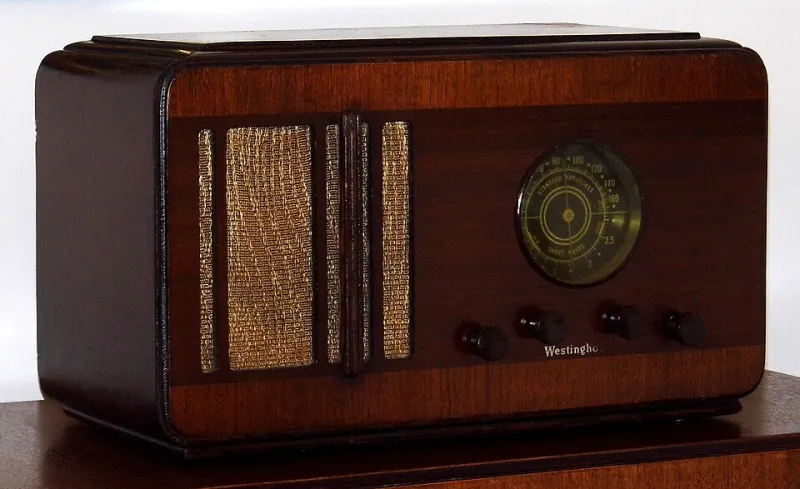
The obsolete format is a signal that persists past its expected lifespan. The communities around it are the receivers, still listening, still insisting the transmission matters.
Some things are worth keeping in a format the world forgot.