Broken Pixels, Sacred Signs: How Gen Z Turned Glitched Screenshots Into a Divination Practice
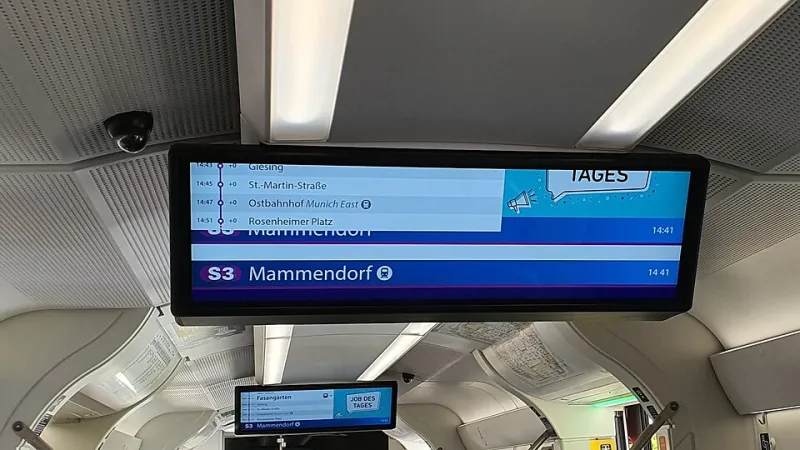
Photo: Foobian, CC BY 4.0, via Wikimedia Commons
The Screenshot That Started a Conversation
It probably began the way most things do on the internet: someone posted something weird, and instead of scrolling past, people stopped. A screenshot with a smeared gradient where a face should be. A JPEG so compressed it looked like a mosaic painted by a fever dream. A TikTok frame frozen mid-transition, the pixels bleeding into each other in a way that felt, somehow, intentional.
Except it wasn't intentional. It was just a file doing what stressed files do. But that didn't stop thousands of people from asking the same question in the comments: what does it mean?
This is the world of glitch divination—an interpretive practice that's been quietly assembling itself across Discord servers, TikTok threads, and niche subreddits for the last few years. It doesn't have an official name. It doesn't have a founder. It just has a growing number of younger internet users who've decided that corrupted images deserve the same careful attention we once gave tea leaves and tarot cards.
Pattern Recognition Wearing a Hoodie
Here's the thing about humans: we are absolutely terrible at seeing randomness for what it is. The brain is essentially a prediction engine that never clocks out. It finds faces in wood grain, narratives in coincidences, and—apparently—meaning in compression artifacts.
Psychologists call this apophenia: the tendency to perceive meaningful connections between unrelated things. It's the same impulse that makes us see animals in clouds or feel like a song came on at exactly the right moment. For most of human history, this tendency got channeled into religion, astrology, and folklore. For Gen Z, it's getting channeled into corrupted image files.
What's different this time isn't the behavior—it's the medium. The glitched screenshot feels like a distinctly modern oracle. It arrives through your phone. It exists in the same digital space as your texts, your bank notifications, your DMs. When the technology you live inside starts producing images that look wrong, the wrongness hits differently than a cloud shaped like a rabbit. It feels like the system itself is speaking.
Discord Servers as Digital Temples
If you want to understand how this actually functions as a community practice, spend some time in the corners of Discord where these images get shared and dissected. There are servers—some with only a few hundred members, others considerably larger—dedicated almost entirely to collecting and interpreting visual artifacts. Corrupted screenshots get pinned. Recurring patterns get named. Members develop shared vocabularies for different types of glitches, the way a theology develops its own terminology over time.
The interpretive frameworks vary wildly. Some communities treat glitches as emotional mirrors—if a photo of a person's face gets scrambled in a specific way, it's read as a reflection of psychological state. Others focus on the location of the corruption in the frame, developing loose spatial grammars about what it means when the top-left corner dissolves versus when the center holds. A few lean harder into the occult framing, overlaying glitch analysis with tarot symbolism or numerology.
None of this is rigidly codified. That's actually part of the appeal. The interpretive practice stays loose, personal, and adaptable—which is exactly how folk magic has always worked.
TikTok as the Transmission Tower
If Discord is where the deep analysis happens, TikTok is where it spreads. Creators have built followings by posting glitched images with slow, deliberate commentary—the audio equivalent of someone reading an ancient text aloud. The pacing matters. The pauses matter. There's a specific kind of reverent seriousness that performs very well in this niche, even when (especially when) it's slightly ironic.
The irony layer is worth sitting with for a second. A lot of Gen Z engagement with glitch divination operates in that comfortable space between genuine belief and knowing performance. People participate fully while also maintaining the option to say it's just a bit. This isn't cynicism—it's a sophisticated relationship with meaning-making that refuses to commit to either pure faith or pure skepticism. The glitch gets to mean something and be a joke and be aesthetically interesting all at the same time.
That flexibility is probably why it's lasted longer than most micro-trends. There's no single way to be wrong about it.
When the Machine Slips
There's something worth naming about why this type of image gets this kind of attention. Glitched screenshots aren't just random noise—they're evidence of a system failing to maintain its own coherence. When a JPEG corrupts, you're seeing the gap between what the file was supposed to show and what it actually rendered. You're seeing the technology's seams.
For a generation that grew up inside digital systems so seamless they became invisible, watching those systems crack open is genuinely striking. The glitch is proof that the interface has an underside. That there's something behind the polished surface. And if there's something behind the surface—well, what is it? What's back there?
The answer, for glitch diviners, is: something worth reading.
Whether or not you buy the metaphysics, the cultural logic is coherent. These communities have found a way to treat technological failure as a site of meaning rather than just inconvenience. They've built interpretive rituals around images that most people dismiss with a hard refresh. And in doing so, they've made the broken parts of the internet feel like they belong to them—like signals from somewhere just outside the frame, waiting for someone paying close enough attention to finally pick up.