Stuck on Purpose: The People Who Find Peace in Pages That Never Finish Loading
There's a particular kind of purgatory most internet users know well. The progress bar that crawls to 97% and just... stops. The favicon spinning in a browser tab like it's trying to work something out. The half-rendered webpage sitting there with its images replaced by gray rectangles, daring you to refresh. For the average person, this is friction. For a surprisingly dedicated corner of the internet, it's a vibe worth chasing.
Welcome to the world of loading culture — a loose, scattered movement of artists, meditators, coders, and general weirdos who have decided that the liminal space of the incomplete load is worth sitting in. Not passing through. Sitting in.
The Spinning Circle as Aesthetic Object
If you've spent any time on forums like Neocities communities, certain Discord servers, or the stranger back-alleys of Tumblr, you've probably stumbled across content that celebrates rather than laments broken digital states. Corrupted JPEGs, half-loaded HTML, progress indicators frozen mid-animation — these aren't bugs to be reported. They're textures.
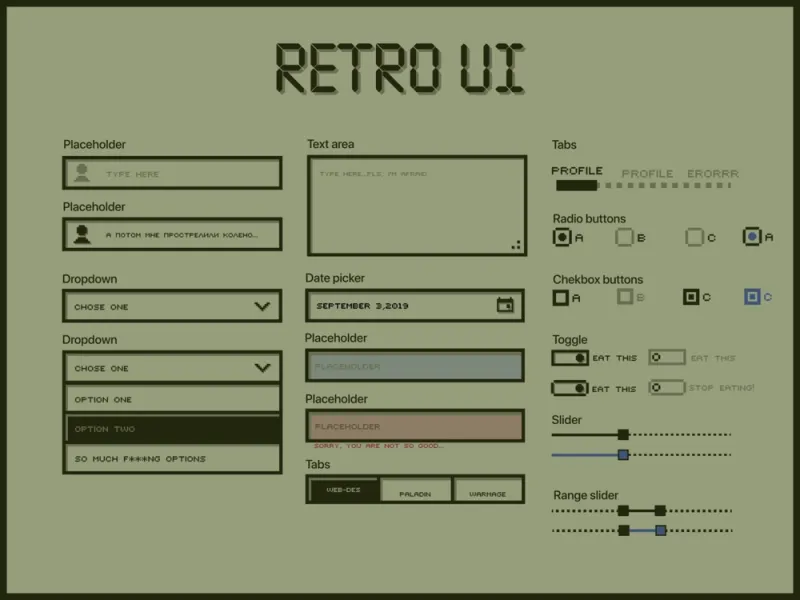
The loading bar, specifically, has taken on a kind of totemic significance in these spaces. There are entire archives dedicated to cataloguing different loading animations across operating systems and eras — the classic Windows hourglass, the macOS beach ball, the chunky blue progress bars of Internet Explorer, the smooth skeleton loaders of modern web design. People discuss these the way record collectors discuss pressings. There's a vocabulary forming around the emotional register of different spinners. Some feel "anxious." Others feel "patient." A few, apparently, feel "holy."
One user on a Neocities-adjacent forum described their favorite loading state as "the last honest moment before the internet pretends it knows what you want." That line got passed around a lot.
Intentional Slowness as Practice
Some people in these communities aren't just appreciating broken loading states when they happen to encounter them — they're engineering the conditions for them. There's a subset of users who deliberately browse on throttled connections, or who seek out unoptimized sites from the late 1990s and early 2000s specifically because those pages load the way old movies look: with grain, with effort, with visible time passing.
This overlaps with the broader slow web movement, but it's more specific and stranger. It's less about digital minimalism or escaping the algorithm and more about the sensory experience of waiting itself. Some practitioners describe it in almost meditative terms. The load state, they argue, is one of the few moments in modern internet use where nothing is demanding your attention. The content hasn't arrived yet. There's nothing to react to, nothing to scroll past, no recommendation engine trying to anticipate your next click. There's just the spinner, doing its thing, indifferent to you.
One person running a small personal site dedicated to this practice — the site itself loads intentionally slowly, via a JavaScript delay they built in — described it as "the closest thing to a breath the internet allows."
Art Made in the Waiting Room
Predictably, the aesthetic has generated its own creative output. There are musicians making ambient tracks built entirely from the sounds of old dial-up handshakes, buffering alerts, and the subtle hum of a hard drive working through a large file. The music doesn't resolve. It loops and drifts and stalls in ways that feel like a progress bar that never quite hits 100. It's not comfortable exactly, but it's not uncomfortable either. It occupies a space that doesn't have a great name yet.
Visual artists in the community create what some call "render art" — images frozen at various stages of incomplete generation, where the full picture is implied but never delivered. Think half-loaded stock photos, images where the compression artifacts have been preserved or even amplified, compositions that look like they got interrupted. The aesthetic is adjacent to glitch art but distinct from it. Glitch art tends to celebrate the rupture, the moment something breaks. Render art is quieter. It's about the pause before the break, or the pause instead of resolution.
There are also people building actual interactive pieces — webpages designed to load forever, where the "content" is the loading state itself. Some of these are elegantly simple: a progress bar that increments by one percent every few minutes, attached to nothing. Others are more elaborate, with fake file names appearing in status bars, phantom images beginning to render and then stalling, text that loads one character at a time over the course of an hour.
The Ritual Dimension
Here's where it gets genuinely interesting, and maybe a little out there. A handful of these communities have developed what can only be described as rituals around loading states. There are group sessions — usually coordinated over Discord or IRC — where participants simultaneously open the same slow or broken webpage and sit with it for a set period of time. No talking during the load. Some people journal. Some just watch the spinner.
The framing varies. Some communities treat it as a secular mindfulness exercise, a deliberate insertion of non-productive time into a day otherwise optimized to death. Others lean into more explicitly spiritual language, describing the unresolved load as a kind of threshold — a place between states, between the intention to access something and the thing itself. The content that never loads becomes, in this reading, a kind of permanent potential. It could be anything. It's never pinned down.
This resonates with older ideas about liminal space — the anthropological concept of in-between states, thresholds, the transformative power of being neither here nor there. The internet, for all its speed and optimization, rarely offers genuine liminality anymore. Everything loads fast. Everything resolves. The loading screen communities are, in a strange way, trying to recover something that infrastructure has taken from them.
What It Says About Where We Are
It would be easy to read all of this as ironic, or as an elaborate bit. Some of it probably is. But a lot of it doesn't feel that way. The earnestness in these spaces is hard to fake at scale, and the creative output is too consistent and too varied to be purely performative.
What seems to be happening, underneath the spinning GIFs and the ambient buffer music, is a genuine reckoning with what constant optimization has cost digital experience. The internet was supposed to get better as it got faster. And in most measurable ways, it did. But something got lost in the acceleration — some quality of presence, of anticipation, of a moment that belonged to you rather than to whatever was loading into it.
The people sitting with their spinning loaders aren't Luddites. They're online, deeply and constantly. They just found a frequency in the static that most people skip past without hearing.
Maybe the progress bar was never supposed to complete. Maybe the point was always the waiting.