Typed Into Being: The Text-Only Worlds Still Running on Telnet

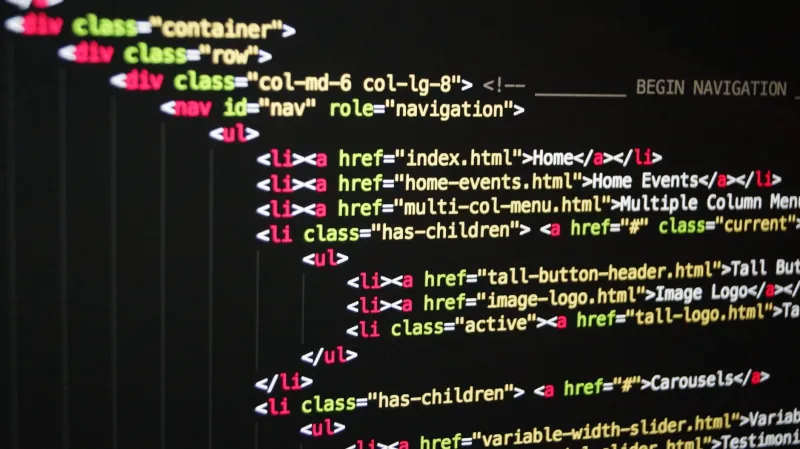
Photo by Photo by Cong Long Vu on Unsplash on Unsplash
The first thing you notice is the silence. You open a terminal, type the address, and the screen fills with text — a login prompt, a banner, a short paragraph of description, and then nothing. No music. No loading bar. No cursor shaped like a hand. Just a blinking block and a sentence telling you that you are standing in a courtyard.
You type look. The courtyard describes itself. You type north and you're in a corridor. You type say hello and your words appear, verbatim, prefixed by your character's name, in a room full of people you cannot see.
This is a MUD — a Multi-User Dungeon — and it is the grandfather of every online multiplayer game you have ever played. A surprising number of them are still running in 2026, on telnet ports that haven't changed in twenty-five years.
The oldest genre that never died
The first MUDs appeared in the late 1970s on university machines, and they spread the way all good ideas spread through computer science departments: by people copying the code and remaking it their own way. At their peak in the 1990s, thousands were running. Many were fantasy adventures. Some were social spaces with no combat at all. A few were elaborate roleplay environments where typing 'say' badly could get you in trouble with an admin.
Then graphical MMOs arrived, and the received wisdom was that MUDs would fold. Instead, a subset calcified into permanence. A significant chunk of today's surviving game worlds run on codebases — ROM, CircleMUD, LP — that were written so long ago their original authors have mostly retired from computing entirely. And yet: patched, maintained, migrated between hosts, they still take connections.
You can find them in the usual places: old directories, hobbyist forums, a subreddit that posts a new listing every few weeks, and word of mouth in the terminal-enthusiast corners of the internet. Most are free. Some have been running continuously on the same server since the Clinton administration.
What a text world can do that a rendered one can't
The appeal is not nostalgia, at least not mostly. It's bandwidth of a different kind.
In a graphical game, the art department decides how the room looks and the budget decides how many people can be in it. In a MUD, the room is described and your brain fills in the rest, which means one hundred players standing in a tavern see a hundred different taverns. Nobody's immersion is broken by a low-resolution chair. The chairs are perfect.
There's also the matter of typing itself. Typing is slower than clicking, and that slowness turns out to be a social feature. Combat in a MUD is usually a rhythm of commands — attack, cast, heal, flee — and it demands a kind of sustained attention that modern games mostly don't ask for and often actively design out. You cannot tab away from a fight. You are in it, keyboard first.
And then there are the parts that aren't games at all. Plenty of surviving MUDs are essentially persistent chat rooms with geography. Players hang out in a library that doesn't exist. They run book clubs. They get married in-game. One long-running social MUD has an unwritten rule that new players are greeted by whoever happens to be online, with a typed paragraph introducing the world — a human onboarding process that no tutorial system has ever improved on.
The admins holding the ports open
Running a MUD in 2026 is a labor of stubbornness. Someone has to pay for the server, apply the security patches, wrangle the permissions, mediate disputes between people who may have known each other for two decades, and write or approve new content — rooms, quests, systems, area files — often in a scripting dialect that predates most of the current playerbase.
Most surviving MUDs are run by small teams, usually two to five people, and the average tenure is measured in decades. The work isn't glamorous. There's no monetization, no studio, no growth target. There's a port, a codebase, and a group of players who would notice if it went dark.
That last part is the actual reason these things persist. MUD communities are small — dozens rather than thousands — and fiercely stable. Players who started in 1999 are still logging in weekly. Some now play alongside their own kids, which is a sentence that will make anyone over forty feel strange.
Why text won't fully go away
Text has one enormous advantage over any other medium: it costs almost nothing to change. A new area can be written in an afternoon. A player-driven storyline can be typed into existence by an admin on a lunch break. The barrier between the world and its author is a text editor, and that means the world can grow by hand, forever, without a graphics pipeline or a patch window.
That's why MUDs didn't die along with their platforms. They don't need a platform. A server, a port, and a willingness to answer the same onboarding questions five hundred times — that's the entire infrastructure. It runs on the same internet as everything else and asks nothing of it.
If you want to see for yourself, the entry barrier is low but real. Get a client. Get an address. Type connect. Somebody will probably say hello, in text, and wait for you to type something back. That's the whole game, and it's been the whole game for something like four decades.
Signal from the static.