Still Ringing: The Stubborn Sysops Keeping Dial-Up Bulletin Boards Alive in a Cloud-Obsessed World
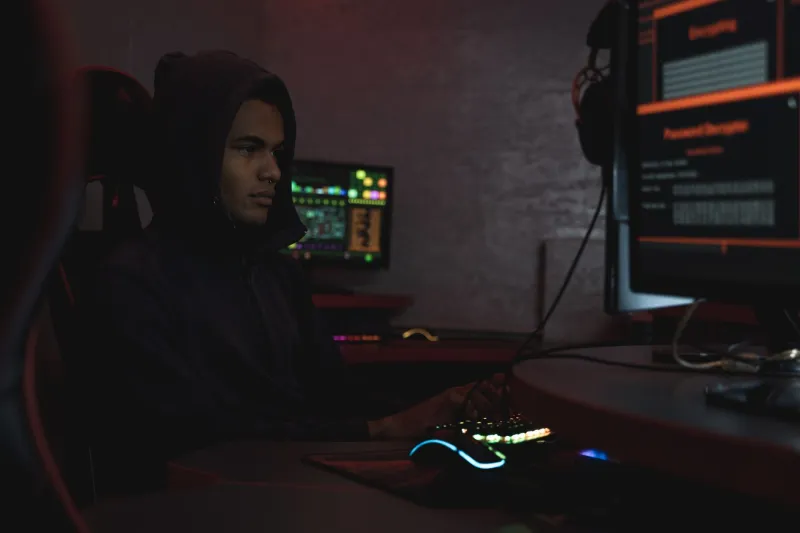
Somewhere in a spare bedroom in Ohio, a stack of aging hardware is humming quietly, waiting. A phone line — an actual copper phone line — runs into a modem that hasn't been manufactured in over two decades. Occasionally, it rings. Occasionally, somebody connects.
This is a bulletin board system. A BBS. And in 2024, against every conceivable logic of the modern internet, a few hundred of them are still operational.
What Even Is a BBS at This Point
If you didn't grow up with one, a bulletin board system is roughly what it sounds like: a computer that other computers could call directly, dial-up style, and use to post messages, share files, play door games, and generally exist in a text-based proto-social-network. Before the web was a thing. Before AOL. Before any of it.
They peaked hard in the late '80s and early '90s, when tens of thousands of boards operated across the country — some run by teenagers out of their parents' basements, some by hobbyists with serious hardware, some by small businesses trying to do something useful with a modem. The internet didn't kill them overnight, but it absolutely killed them. By the early 2000s, the population had collapsed to a rounding error.
And yet. A search on The BBS List — yes, that still exists — will turn up somewhere between 300 and 500 active systems depending on when you check. Some are telnet-accessible now, which is a bit of a philosophical compromise, but others? Others still have phone numbers. Actual phone numbers you can dial.
The People Running This Thing
The sysops — system operators, the people who run these boards — are a specific type of person. Not quite the same as someone who maintains a vintage car or collects vinyl, though there's overlap in temperament. They're more like custodians of a very particular worldview.
Take someone like a board operator in rural Tennessee who's been running his system since 1991. He's upgraded the hardware three times, but the soul of the thing — the message bases, the file archives, the door games — has continuity stretching back over thirty years. He doesn't advertise. He doesn't need to. His regulars know where to find him.
"The whole point was always that it was local," he explained in a forum post that circulated through BBS-adjacent communities a couple years back. "You called a board because someone near you ran it. That geographic connection meant something. The internet made everything available and somehow made it all feel like it belonged to nobody."
That tension — belonging versus availability — comes up constantly in conversations with the people still invested in BBS culture. The modern web is theoretically infinite and practically owned by about four companies. A bulletin board is finite, personal, and owned by whoever's paying the electric bill.
Who's Still Calling
The caller demographic is genuinely strange in the best way. There are the obvious ones: aging Gen Xers and late boomers who remember the original culture and treat a BBS call like a visit to a place they used to live. These people know the etiquette, know the history, and sometimes get a little misty about it.
But there's also a younger cohort that's harder to explain and more interesting to think about. Some are hobbyists who came at it through retrocomputing — they got into old Commodore 64s or Amiga hardware, and the BBS ecosystem was a natural extension of that interest. Others are, frankly, people who are just done with the surveillance-capitalism hellscape of contemporary social media and find something genuinely appealing about a communication system that is, by design, impossible to optimize for engagement metrics.
You can't algorithmically curate a BBS. You can't A/B test it. There are no ads. There's no recommendation engine nudging you toward content that will make you angrier. You connect, you read, you post, you disconnect. The interaction is complete in itself.
For a certain type of person in 2024, that sounds less like a limitation and more like a relief.
The Technical Reality
Maintaining a BBS in the current era is not exactly plug-and-play. The software still exists — Synchronet and Mystic BBS are both actively developed, which is its own kind of miracle — but the hardware challenges are real. Actual dial-up operation requires actual phone lines, and phone companies have been quietly sunsetting copper infrastructure for years. Some sysops have had to get creative, using VoIP adapters and line simulators to keep the dial-up pathway functional even as the physical infrastructure dissolves.
Telnet-accessible boards sidestep most of this, and they've become the dominant mode of access for most active systems. You can hit a telnet BBS from a modern terminal window without any special hardware at all. Some people argue this defeats the purpose; others point out that the community and the culture are what matters, not the transmission method.
There are also hybrid systems that offer both — a phone number for the purists and a telnet address for everyone else. These tend to be the most active boards, drawing from both camps without making anyone feel like they've compromised too much.
Why It Matters Beyond Nostalgia
Here's the thing that's easy to miss if you frame this purely as a retro hobby: the values embedded in BBS culture are not actually obsolete. Decentralization, local community, operator accountability, user ownership of data — these are things people are actively arguing about in the context of the modern web right now. The fediverse, self-hosted platforms, mesh networks, the whole "IndieWeb" movement — these are all, in some sense, trying to recover something that bulletin board culture had by default.
The sysops still running boards in 2024 didn't need to rediscover these ideas. They never let go of them.
There's something worth sitting with in that. While the tech industry spent thirty years building toward centralization, scale, and extraction, a few hundred people in spare bedrooms kept their modems plugged in and their message bases open. Not because they thought they'd win. Not because they expected a comeback. Just because the thing they built still worked, and the community they'd made still wanted to meet there.
The Signal in the Noise
If you want to find an active BBS, The BBS List at bbslist.textfiles.com is the place to start. SYNCTERM is free software that'll let you connect via telnet with proper ANSI rendering. Some boards have active door game communities, some have file archives that include software you genuinely cannot find anywhere else, and some are just quiet places where a handful of people check in and talk.
The phone numbers are harder to track down, and some sysops are protective of them — not secretive exactly, but selective. You have to earn it a little. You have to show up in the telnet spaces first, prove you're not going to be weird about it, and eventually someone will tell you the number.
There's something almost ritualistic about that. In a world where access to everything is frictionless and instant, having to ask for a phone number feels like a small act of resistance. The BBS asks something of you before it gives you anything back.
That, maybe more than the blinking cursors and the ANSI art, is what keeps people coming back.