Click, Clack, Unplug: The Writers Who Traded Their Screens for Something Louder and Slower
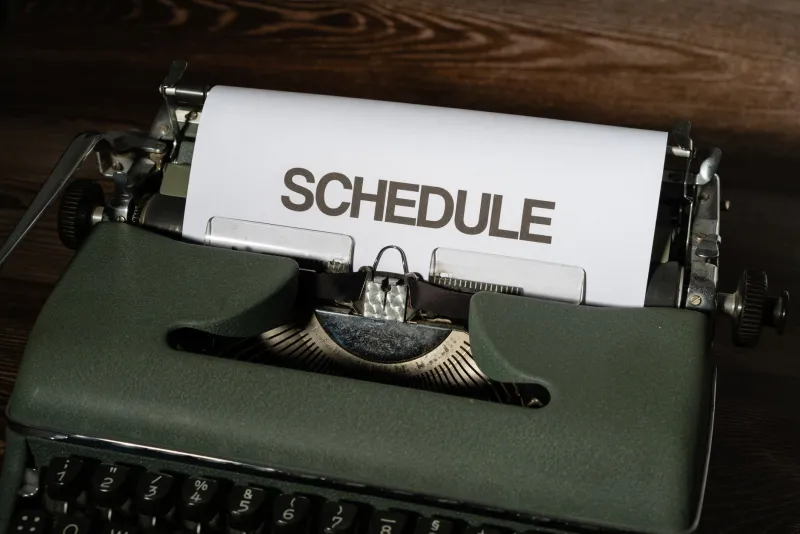
There's a particular sound that's been showing up in coffee shops, home offices, and spare bedrooms across the US lately. It's not a notification. It's not a podcast playing at half-speed. It's the sharp, deliberate percussion of a typewriter — and the person behind it probably isn't doing it ironically.
The typewriter revival is real, and it's bigger than a few quirky writers chasing an aesthetic. It's a movement, loosely organized and quietly stubborn, made up of journalists, novelists, poets, and hobbyists who have looked at the modern writing environment — the tabs, the alerts, the cloud sync failures, the infinite scroll lurking two clicks away — and decided they'd rather deal with a ribbon that needs replacing.
The Screen Problem Nobody Wants to Admit
Here's the thing about writing on a laptop: it's writing on the same machine you use to check your email, watch YouTube, argue in comment sections, and doomscroll at midnight. The creative act and the distraction engine live in the same box, and no amount of focus apps or browser blockers fully resolves that tension.
Marcus Teller, a freelance journalist based in Portland who covers environmental policy, switched to a 1970s Olympia SM9 about three years ago. "I kept losing hours," he says. "I'd be mid-sentence and suddenly I'm reading about something completely unrelated. The typewriter just doesn't do that. It's one thing. It does one thing."
That singularity — the fact that a typewriter cannot do anything except produce typed text — turns out to be genuinely valuable to people whose brains have been rewired by years of multitasking. The machine enforces focus not through software, but through physical limitation. There's no tab to switch to. There's no inbox badge glowing in the corner.
The Tactile Argument
Ask any committed typewriter user what they love about it and they'll eventually get to the keys. Not the aesthetics of the keys, but the feel of them — the resistance, the travel, the small satisfying thud of a letter committing itself to paper.
Digital keyboards, even the expensive mechanical ones, are designed for speed and silence. Typewriter keys are designed for impact. You have to mean it, at least a little. That physical commitment changes something in the writing process, according to people who've made the switch.
Naomi Chrest, a novelist in Chicago working on her third book, describes it as "writing with your whole arm." She started using a 1950s Royal Quiet De Luxe — the name is a lie, she notes, it is not quiet — after struggling with what she calls "draft paralysis" on her laptop. "When I'm on the computer I'm editing as I go, constantly. With the typewriter, I can't. I type it, it's there, I move on. The first draft actually gets finished."
That inability to easily delete is a feature, not a bug. The commitment baked into every keystroke seems to quiet the inner critic that digital writing tools accidentally amplify.
Not Nostalgia, Actually
It's tempting to frame the typewriter revival as pure nostalgia — Millennials and Gen Z romanticizing an era they didn't live through, chasing the sepia-toned version of The Writer. But spend any time talking to the people actually doing this and that reading falls apart pretty quickly.
Most of them aren't interested in pretending it's 1962. They're not typing with a cigarette balanced on the ashtray next to them, waiting for their editor to call on the rotary phone. They scan their finished pages and send them as PDFs. They use the typewriter as a drafting tool and move back to digital for editing and submission. The workflow is hybrid, not purist.
What they're resisting isn't technology broadly — it's the specific architecture of contemporary digital tools, which are built to maximize engagement and minimize friction between you and the next thing. The typewriter is analog resistance gear. It's a deliberate friction machine.
"I don't think I'm living in the past," Teller says. "I think I'm opting out of a particular design philosophy that doesn't serve me as a writer."
The Community Keeping It Alive
The infrastructure supporting this revival is surprisingly robust. Typewriter repair shops, which seemed headed for extinction, have quietly found new customers. In cities like Denver, Austin, Nashville, and Brooklyn, small repair operations are booked out weeks in advance. Online communities — forums, subreddits, Discord servers — trade tips on cleaning mechanisms, sourcing ribbons, and tracking down specific models.
The machines themselves have become collectibles with actual market heat behind them. A well-maintained Hermes 3000 or an Olivetti Lettera 32 can run several hundred dollars on eBay, and prices have climbed steadily over the last decade. What was once a thrift store curiosity is now a sought-after tool.
Typewriter festivals and meetups — yes, those exist — draw crowds in places like San Francisco and Philadelphia. People bring their machines, type in public, compare notes. It has the energy of any niche enthusiast community: obsessive, welcoming, slightly evangelical.
What the Noise Actually Does
There's one more element that doesn't get discussed enough: the sound. Typewriters are loud. That's not a side effect, for a lot of users — it's part of the point.
The clatter of mechanical keys creates an auditory environment that some writers find genuinely conducive to focus. It's a feedback loop: the sound of productive work, confirming in real time that words are being made. Several users describe it as almost meditative, a rhythm that carries them through a session in a way that the near-silent tap of a laptop keyboard doesn't.
Chrest laughs when she talks about her neighbors. "They definitely know when I'm writing. But honestly, hearing it from outside probably sounds like I'm getting things done, because I am."
The Irony Is the Point
There's something fitting about the fact that this movement lives partly online — that communities of typewriter enthusiasts organize on Discord, post their typed pages to Instagram, and watch YouTube tutorials on cleaning a stuck typebar. The digital world is where they find each other. The analog machine is where they go to escape it.
That paradox is kind of the whole thing. You need the noise of modern connected life to understand why someone would want to sit down with a machine that can't connect to anything, that can't be updated, that doesn't know what year it is, and just type.
The signal, in this case, is the static you make yourself. One key at a time.